Infrastructure and access
- Infrastructure Planning / Mapping / Funding7
- Fiber / Fixed Broadband Infrastructure5
- Last-Mile / Access Infrastructure1
- Mobile / Wireless Infrastructure1
- Telecommunications / Broadband Infrastructure1
Digital Divide Country Profile · Europe
Closing the digital divide, expanding meaningful connectivity, and advancing digital education and workforce participation.
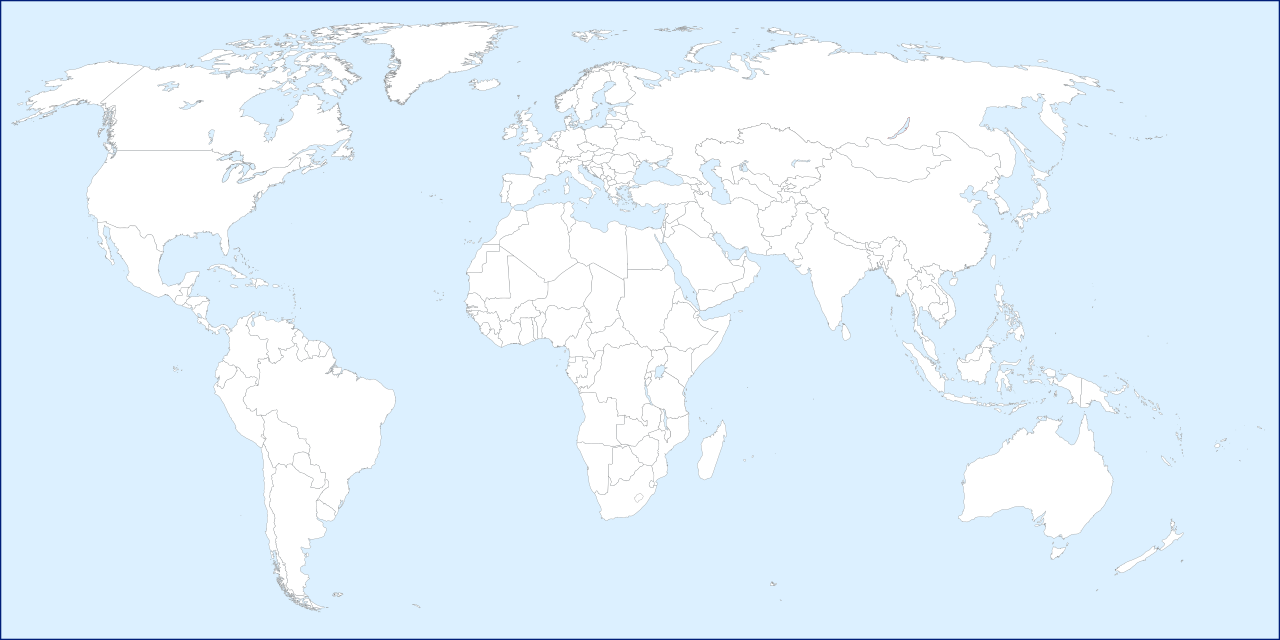
Location in the world

Europe
 Sweden
National digital inclusion context
This profile organizes the initiatives directly connected to Sweden in the global research inventory. It follows the study's country-profile framework: national context, broadband infrastructure, inclusion practices, education and workforce connections, implementation actors, and intended contribution.
The documented portfolio emphasizes Infrastructure Planning / Mapping / Funding, Fiber / Fixed Broadband Infrastructure, Last-Mile / Access Infrastructure, Fiber/Fiber Optic, Artificial Intelligence (AI). The profile treats infrastructure, affordability, capability, institutions, support, and outcomes as an interconnected system.
Portfolio pattern
Counts reflect source-workbook tags. One initiative may appear in multiple infrastructure or technology categories.
Education and workforce
3 initiatives explicitly connect to education, K–12, or college/university contexts, and 0 connect to workforce development. Other investments may enable these outcomes indirectly.
Networks, service availability, devices, and connection quality.
Skills, confidence, accessibility, navigation, and support.
Education, work, health, government, and civic opportunity.
Governance, operations, maintenance, funding, and learning.
Project and initiative portfolio
Every directly tagged record is shown with details and supporting URLs preserved from the research workbook.
Digital accessibility regulation
Makes electronic communications, banking, e-commerce and other services subject to accessibility requirements.
Activities and approach: Accessibility requirements; supervision; market surveillance
Rural broadband subsidy
Public grants connect sparsely populated areas with broadband up to 1 Gbps.
Activities and approach: Fiber/VHCN grants
National gigabit connectivity
Targets 98% of households/businesses at 1 Gbps and defined minimum speeds for the remainder, explicitly including rural and sparsely populated areas.
Activities and approach: Gigabit fiber/VHCN; national coverage targets
Community digital inclusion / public access
Provides free physical places for help with digital services, technology, and digital skills.
Activities and approach: Digital assistance; technology access; community learning; municipal service support.
Digital literacy support
Reduces digital exclusion through practical guides, multilingual materials, videos, and support resources.
Activities and approach: Step-by-step guides; brochures; videos; digital service tutorials; support materials.
National digital inclusion partnership and helpline
Coordinates digital inclusion activities and provides personal guidance on where and how to get local digital help.
Activities and approach: National collaboration platform; annual activities; telephone guidance; local referral.
Community-based digital-health access study
Examined digital COVID-19 diagnostic and vaccination services through lay health promoters and identified barriers involving technology, language, trust, distance, and appointment availability.
Activities and approach: Online focus group; digital-health demonstration; community interpretation; qualitative analysis
Digital public-service access
Provides secure government correspondence at national scale.
Activities and approach: Shared digital-post infrastructure; mailbox-provider integration
Rural broadband infrastructure grants
Publicly funds fixed broadband infrastructure where commercial deployment is not viable.
Activities and approach: Fiber infrastructure grants; annual competitive funding rounds; monitoring of funded projects.
Digital inclusion coordination
Creates a sustained multi-actor structure for inclusion and safe use.
Activities and approach: Strategic coordination; operational core; thematic groups; monitoring
Digital accessibility monitoring
Establishes a national baseline for accessibility improvement.
Activities and approach: Automated testing of 576 websites in nine sectors
Rural broadband implementation
Quantified annual deployment for places not reached commercially.
Activities and approach: SEK 740m; 182 projects; fixed broadband
Rural broadband financing
Targets remaining fixed-broadband gaps.
Activities and approach: SEK 822m; 192,548 eligible buildings; 3-year build window
Accessible communications
Adds equivalent text communication alongside voice, including emergency contexts.
Activities and approach: RTT; relay compatibility; interoperable text communication
Rural broadband investment
Uses RRF funding to accelerate broadband deployment in locations where geography and economics slow private rollout.
Activities and approach: Broadband network grants; VHCN
Targeted residual broadband coverage
Sets a minimum 100 Mbps access target for most premises not reached by the 1 Gbps objective.
Activities and approach: Targeted fixed broadband; alternative technologies
Universal broadband safety net
Defines a connectivity floor for the hardest-to-reach premises so no geographic group is left without functional broadband.
Activities and approach: Fixed wireless/satellite/other suitable broadband
Disability digital inclusion policy
Sets goals for usable digital environments and stronger individual digital capability.
Activities and approach: Goals; activities; monitoring; stakeholder consultation
Digital inclusion measurement
Tracks usability, e-ID, affordability, support and skills barriers.
Activities and approach: Survey/research; disability-specific indicators; recommendations
National digital transformation strategy
Links digital competence, public services, welfare, business and connectivity.
Activities and approach: Five strategic areas; AI/data/security cross-cutting
Evidence boundary
Project records document interventions and intended contributions; they do not alone prove nationwide coverage, causal impact, or durable closure.
Profiles will deepen as national statistics, policy documents, evaluations, and implementation evidence are incorporated. Source links allow inspection of underlying evidence.
These sources support the country-level demographic, geographic, and connectivity context. Sources tied to individual projects remain with their project records and are not repeated here.