Literacy converts access into agency.
Skills and confidence enable people to evaluate information, use services, learn, work, and adapt. Digital illiteracy appeared as both a leading barrier and the strongest post-access limitation.
What the research revealed
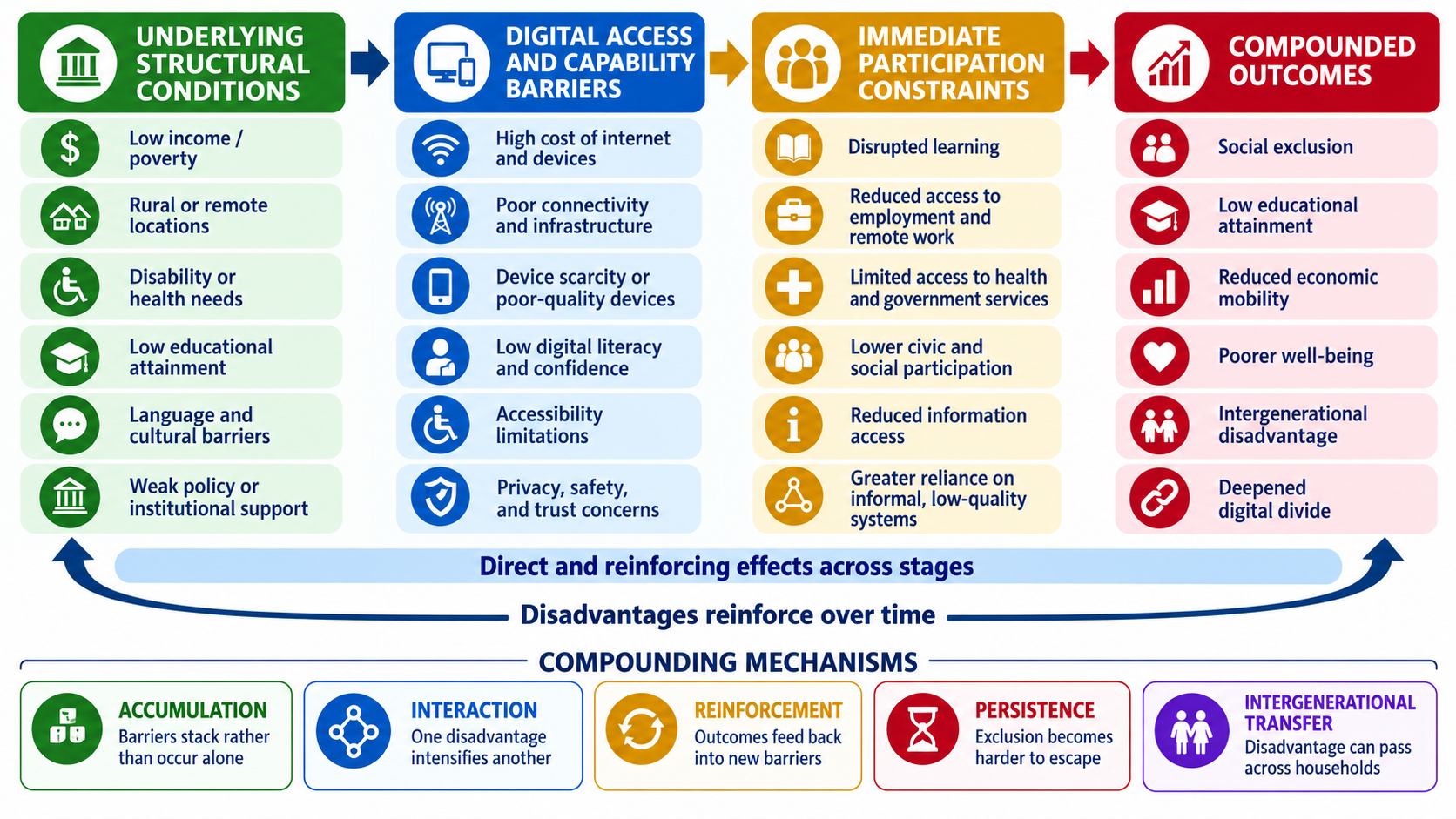
Infrastructure matters, but the evidence consistently showed that affordability, devices, literacy, support, accessibility, trust, policy, funding, geography, culture, and institutions determine whether access becomes participation.
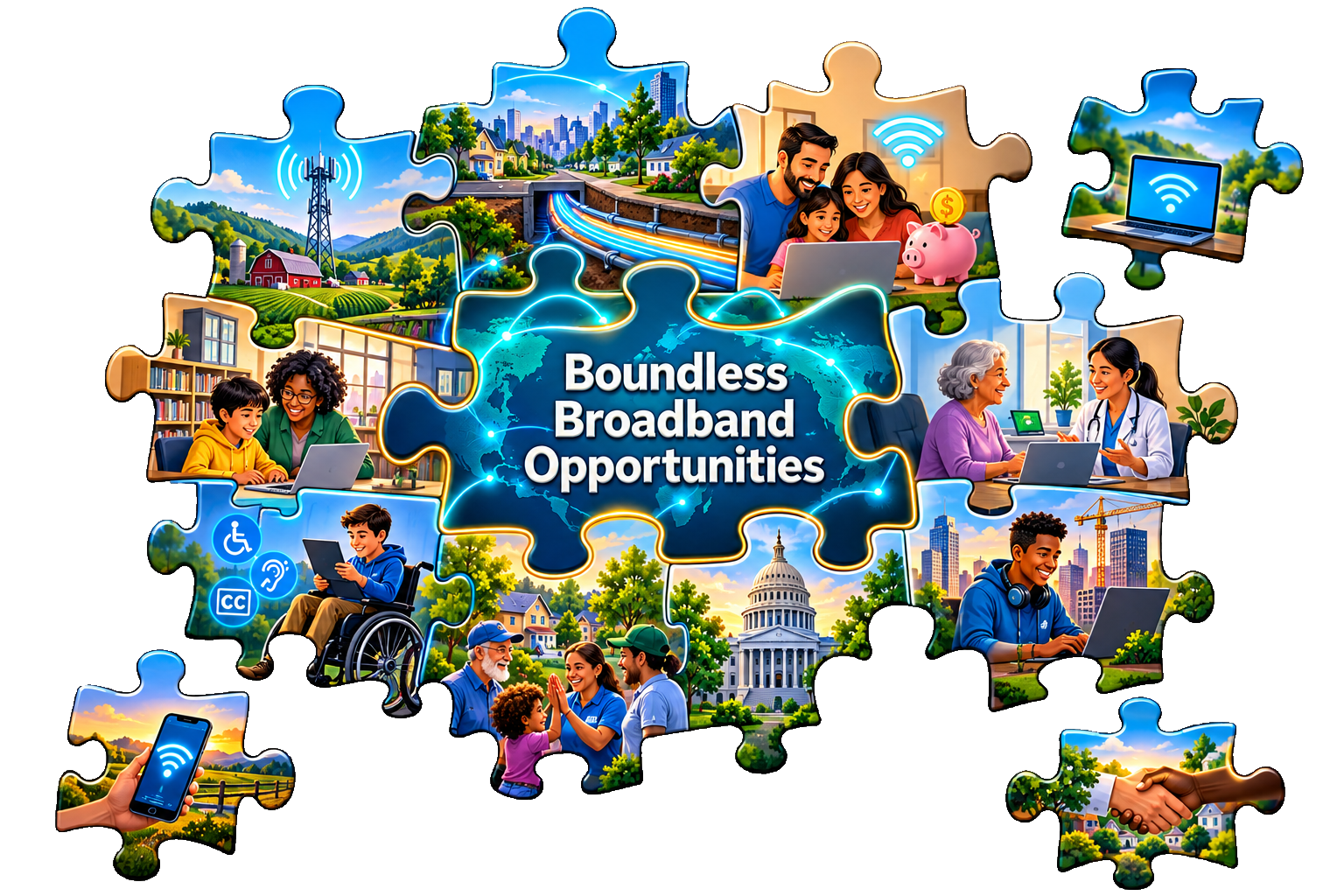
Six integrated findings
The most important findings recur across evidence types. Together, they define a theory of change that extends from entry conditions to sustained human outcomes.
Skills and confidence enable people to evaluate information, use services, learn, work, and adapt. Digital illiteracy appeared as both a leading barrier and the strongest post-access limitation.
Mentoring, repair, educator preparation, digital navigation, parental engagement, and specialized support make systems usable and resilient.
Unequal conditions constrain learning, while well-supported schools, libraries, colleges, and community organizations can build wider capability.
Privacy, cybersecurity, misinformation, transparency, consent, and information quality shape whether users feel safe enough to participate.
Language, accessibility, cognitive load, self-efficacy, age, culture, and relevance determine whether nominally available services are practically usable.
Leadership, policy, coordination, transparent funding, accountability, partnerships, lifecycle planning, and local ownership determine whether programs last.
Implication
Count what connection enables–not only where a network reaches.
Measure affordability, reliability, device adequacy, confidence, accessibility, safe use, educational and workforce participation, satisfaction, and the persistence of benefit.