01Housing
Multiple-dwelling-unit modernization
Visible issue: old building infrastructure.
Model reframe: property governance, resident power, affordability, trust, adoption, technical pathways, and lifecycle responsibility interact.
Success becomes
Reliable and affordable in-unit service, resident choice, adoption, satisfaction, accessibility, and sustained support–not merely a building passed by fiber.
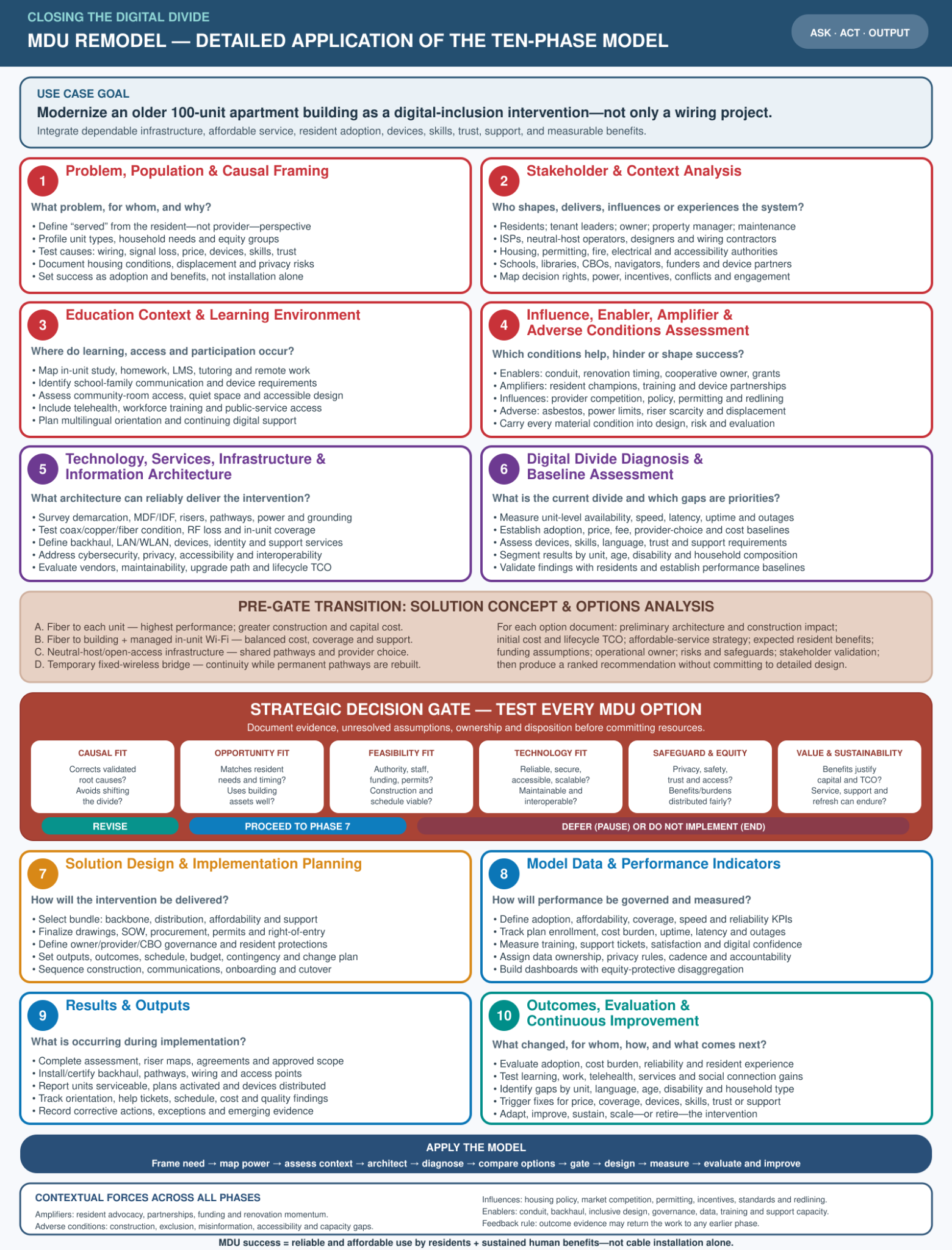
The detailed MDU application carries the case from building and resident assessment through solution fit, implementation, performance, and continuous improvement.
02Public realm
Community free wireless network
Visible solution: free Wi-Fi.
Model reframe: location, personal safety, privacy, accessibility, devices, capacity, backhaul, maintenance, and operating responsibility determine usefulness.
Success becomes
Safe, dependable, inclusive participation in learning and public services–not access-point counts or sessions alone.
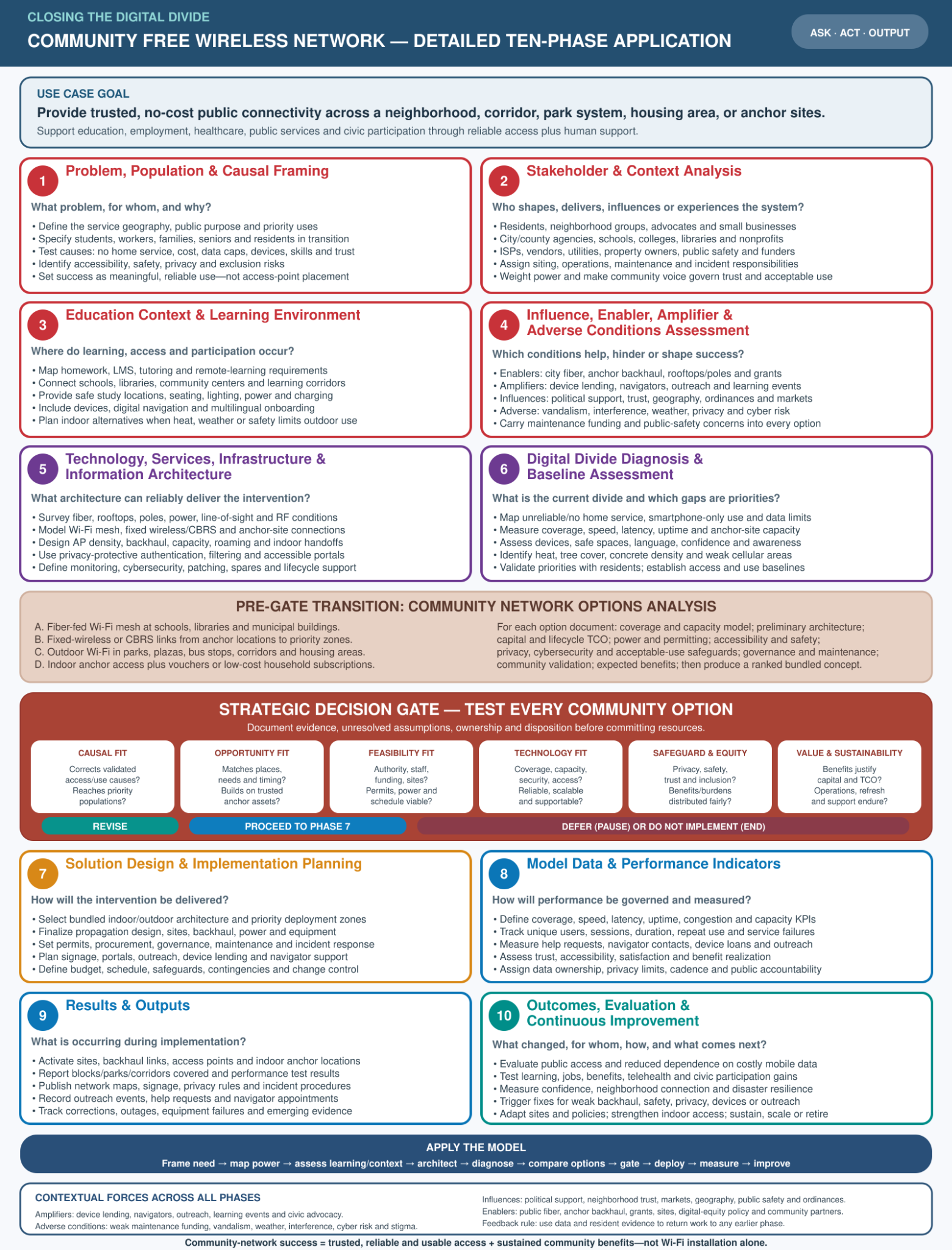
The community wireless illustration tests a free-service concept against safety, coverage, capacity, privacy, accessibility, support, governance, and operating sustainability.
03K–12 education
School hotspot lending
Visible issue: students lack home internet.
Model reframe: a hotspot sits inside a wider household and learning environment involving coverage, data limits, devices, family skills, support, privacy, and continuity.
Success becomes
Students can reliably and safely participate in learning without avoidable interruption, exclusion, or stigma.
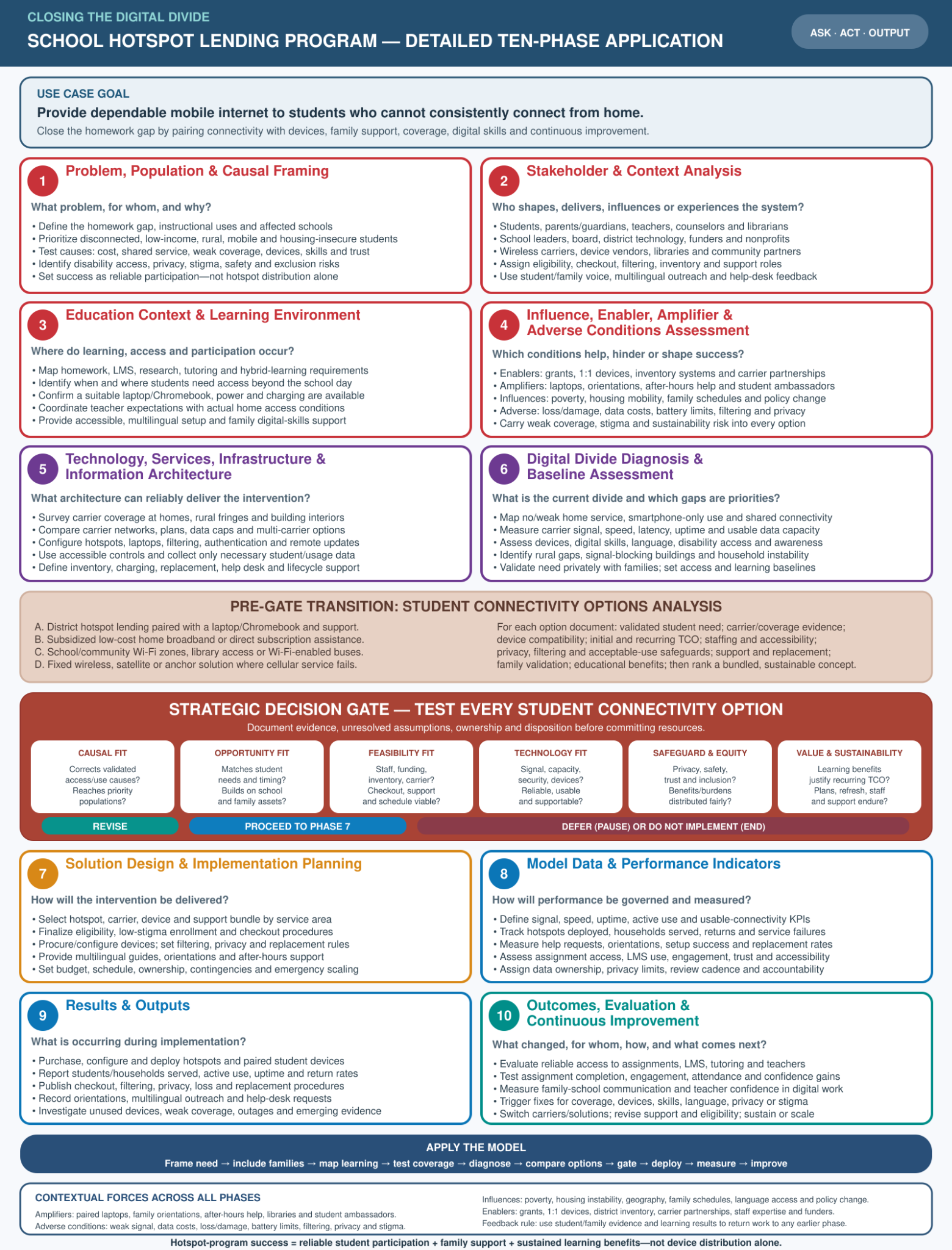
The hotspot application connects student and household needs to coverage validation, equitable distribution, support, safeguards, utilization, and learning continuity.
04Rural development
Community under 10,000 residents
Visible issue: broadband is unavailable or unreliable.
Model reframe: geography, economics, institutional capacity, workforce, affordability, devices, skills, trust, and sustainability may require a hybrid architecture.
Success becomes
Homework access, telehealth participation, workforce learning, business activity, digital confidence, and civic participation that continue after grants end.
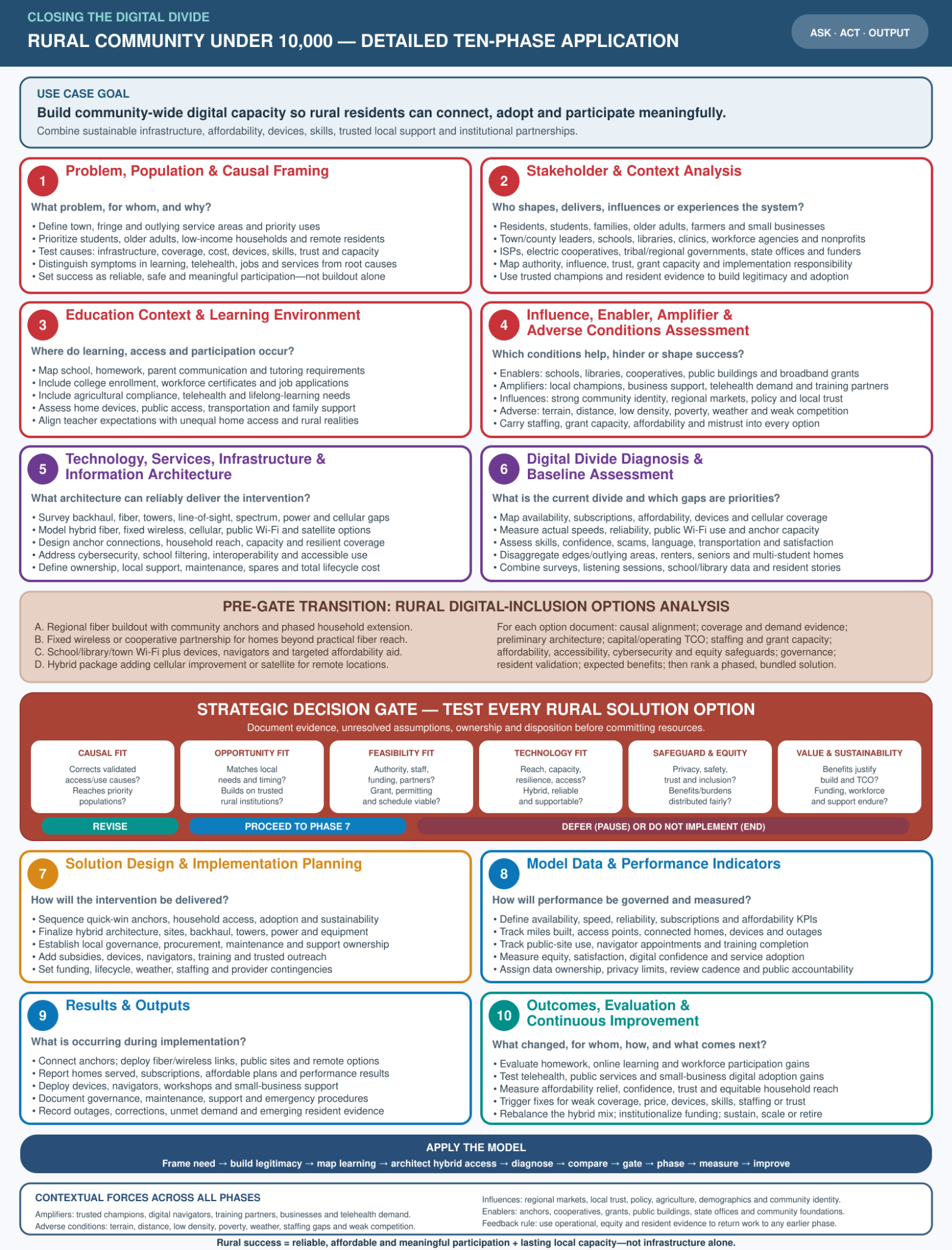
The rural application combines local voice, geographic evidence, hybrid infrastructure, affordability, devices, skills, operations, and sustainability.
05Urban market
Competitive fiber and multifamily inclusion
Visible issue: service exists, but residents are dissatisfied.
Model reframe: quality, value, reliability, choice, housing type, customer experience, market power, and MDU engineering reveal a divide inside a “served” market.
Success becomes
Better price-to-performance, service quality, meaningful choice, customer satisfaction, and comparable access for apartment residents.
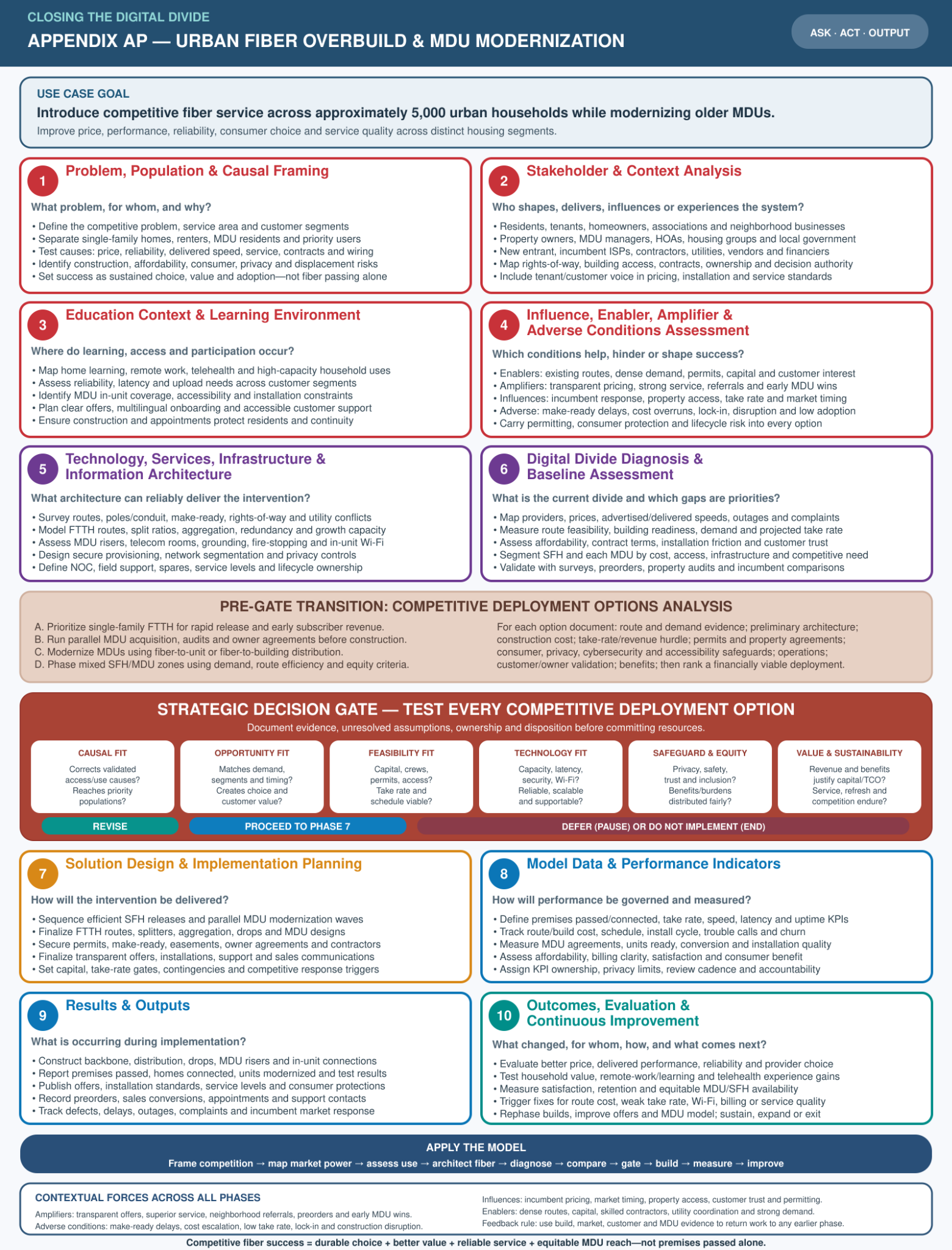
The urban application examines competition, customer value, neighborhood equity, build sequencing, multifamily inclusion, and long-term service performance.
06Emerging technology
AI skills and the emerging AI divide
Visible issue: people can access AI but cannot necessarily use it well.
Model reframe: critical evaluation, source verification, privacy, bias, accessibility, safe use, institutional policy, and human judgment define capability.
Success becomes
More equitable, responsible, confident, critical, and productive participation in AI-enabled education and work.
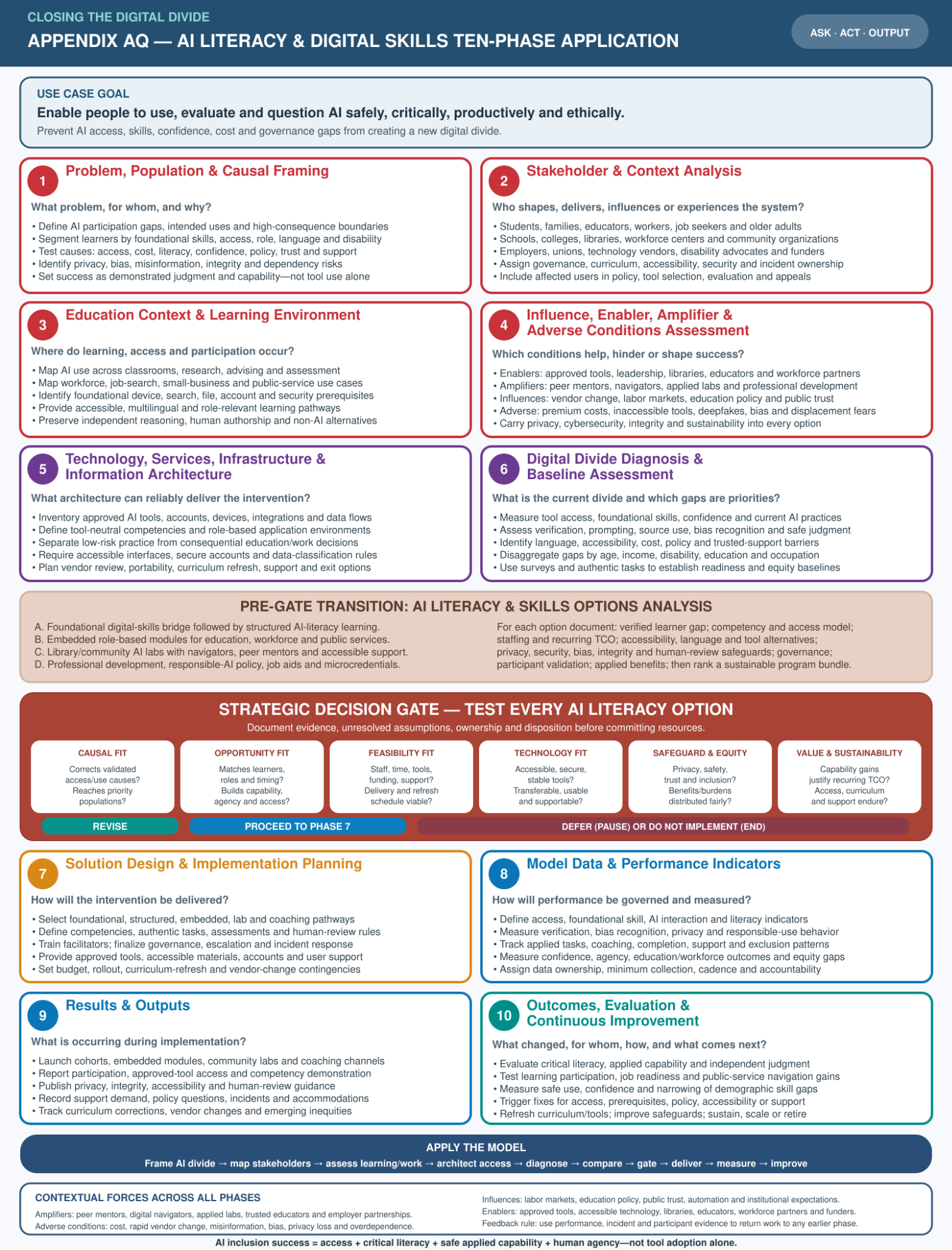
The AI-literacy application treats access, evaluation, ethics, privacy, bias, accessibility, institutional policy, and human judgment as an integrated capability system.