Infrastructure and access
- Fiber / Fixed Broadband Infrastructure7
- Mobile / Wireless Infrastructure6
- Backbone / Backhaul / Middle-Mile Infrastructure5
- Satellite Infrastructure3
- Institutional / School Connectivity Infrastructure2
Digital Divide Country Profile · Europe
Closing the digital divide, expanding meaningful connectivity, and advancing digital education and workforce participation.
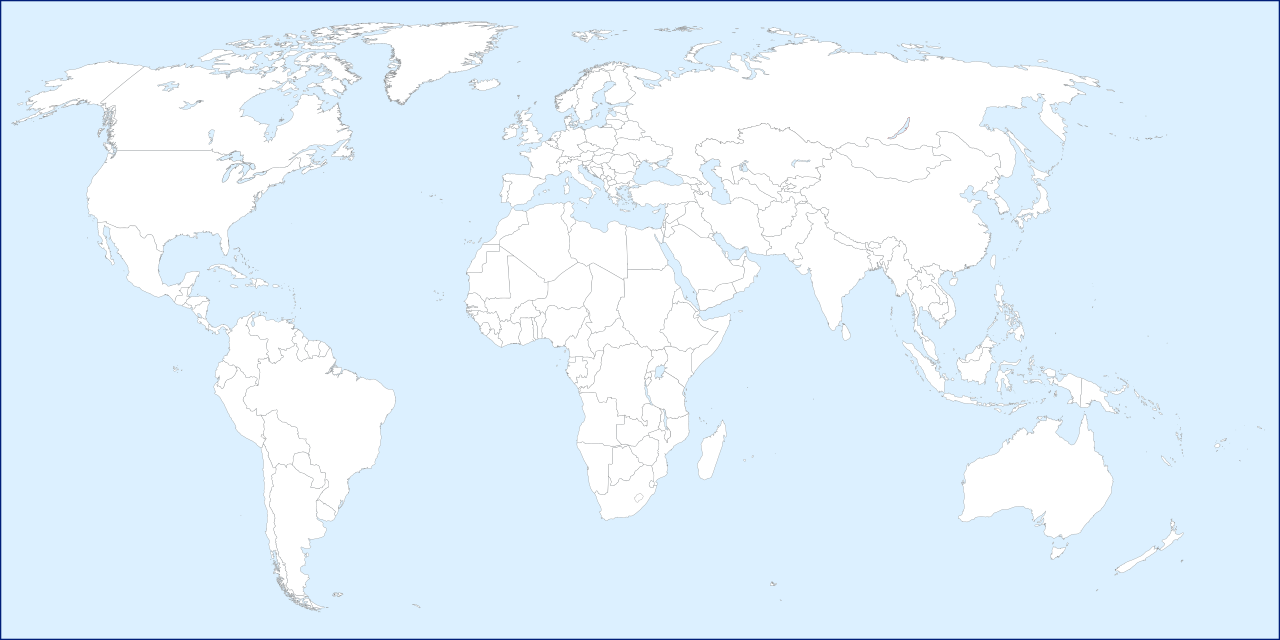
Location in the world
Europe
 Russia
National digital inclusion context
This profile organizes the initiatives directly connected to Russia in the global research inventory. It follows the study's country-profile framework: national context, broadband infrastructure, inclusion practices, education and workforce connections, implementation actors, and intended contribution.
The documented portfolio emphasizes Fiber / Fixed Broadband Infrastructure, Mobile / Wireless Infrastructure, Backbone / Backhaul / Middle-Mile Infrastructure, Fiber/Fiber Optic, Satellite Broadband. The profile treats infrastructure, affordability, capability, institutions, support, and outcomes as an interconnected system.
Portfolio pattern
Counts reflect source-workbook tags. One initiative may appear in multiple infrastructure or technology categories.
Education and workforce
4 initiatives explicitly connect to education, K–12, or college/university contexts, and 0 connect to workforce development. Other investments may enable these outcomes indirectly.
Networks, service availability, devices, and connection quality.
Skills, confidence, accessibility, navigation, and support.
Education, work, health, government, and civic opportunity.
Governance, operations, maintenance, funding, and learning.
Project and initiative portfolio
Every directly tagged record is shown with details and supporting URLs preserved from the research workbook.
Universal-service broadband access
Provides public broadband access points in small communities that otherwise lack affordable high-speed Internet.
Activities and approach: Fiber backhaul; public Wi-Fi; ≥10 Mbps access points
LEO satellite broadband
Funds initial spacecraft for a domestic low-Earth-orbit broadband constellation.
Activities and approach: 16 LEO broadband satellites
Public-institution broadband
Extends communications networks to public institutions so digital education and services are broadly accessible.
Activities and approach: Institutional fixed/mobile broadband
National broadband
Targets high-speed Internet availability for 97% of households.
Activities and approach: Fixed/mobile broadband
School connectivity
Builds Internet-capable IT infrastructure in schools.
Activities and approach: School IT networks/broadband
Network resilience
Includes uninterrupted Internet access as a national objective.
Activities and approach: Resilient infrastructure
School/public-sector connectivity
Builds IT infrastructure in public schools for safe Internet and government-system access, extending meaningful digital connectivity to education.
Activities and approach: School IT networks; Internet access; secure infrastructure; domestic 4G/5G/OpenRAN development
High-capacity national backbone platform
Provides a domestic high-capacity transmission platform supporting national connectivity and resilience.
Activities and approach: Up to 800 Gbps data transmission
Fixed broadband
Continues investment in reliable high-speed fixed Internet.
Activities and approach: Fixed broadband network
Satellite broadband
Uses highly elliptical orbit satellites to provide broadband coverage across the full territory including high latitudes.
Activities and approach: Four communications satellites
Interregional submarine fiber
Connects Chukotka to the national telecom network with weather-independent high-speed fiber.
Activities and approach: 2,000+ km submarine fiber
LEO satellite broadband
Creates a large domestic satellite system for affordable high-speed Internet across the country.
Activities and approach: ~300 LEO satellites planned
Next-generation backbone
Expands national backbone capacity for future broadband demand and network resilience.
Activities and approach: Backbone capacity up to 64 Tbps
Broadband and telecommunications deployment
Expands or enables connectivity for people and communities affected by digital exclusion, addressing availability and service-quality barriers.
Activities and approach: Network deployment or expansion; connectivity delivery
Digital inclusion initiative
Builds digital capability and adoption support for people and communities affected by digital exclusion, addressing skills and participation barriers.
Activities and approach: Targeted digital inclusion activities described in the cited source
Rural and road mobile broadband
Enables major operators to share radio equipment/base stations to improve mobile communications and Internet availability where standalone deployment is uneconomic.
Activities and approach: Shared base stations; mobile broadband; road coverage
Rural fiber backbone
Allows universal-service reserve funding to finance fiber-optic lines directly to settlements, addressing high-cost rural backhaul gaps.
Activities and approach: Fiber-optic lines; universal-service reserve financing
Rural mobile broadband
Extends mobile Internet and cellular service to smaller settlements beyond the original 250–500 resident broadband programme.
Activities and approach: 4G/mobile base stations; universal-service funding
Wireless broadband
Continues investment in high-speed wireless Internet.
Activities and approach: Mobile/wireless network
Remote-community broadband
Brings high-speed Internet to communities currently dependent on expensive, unreliable satellite links.
Activities and approach: Fiber-fed broadband access
Arctic fiber backbone
Replaces fragile satellite dependence with resilient terrestrial fiber in hard-to-reach Arctic districts.
Activities and approach: ~7,000 km optical fiber
Public-institution broadband
Connects residential buildings and social facilities at at least 100 Mbps, improving access to digital services.
Activities and approach: Fiber-based institutional broadband
Evidence boundary
Project records document interventions and intended contributions; they do not alone prove nationwide coverage, causal impact, or durable closure.
Profiles will deepen as national statistics, policy documents, evaluations, and implementation evidence are incorporated. Source links allow inspection of underlying evidence.
These sources support the country-level demographic, geographic, and connectivity context. Sources tied to individual projects remain with their project records and are not repeated here.