Digital Divide Country Profile · Africa

SZ

Eswatini

Closing the digital divide, expanding meaningful connectivity, and advancing digital education and workforce participation.

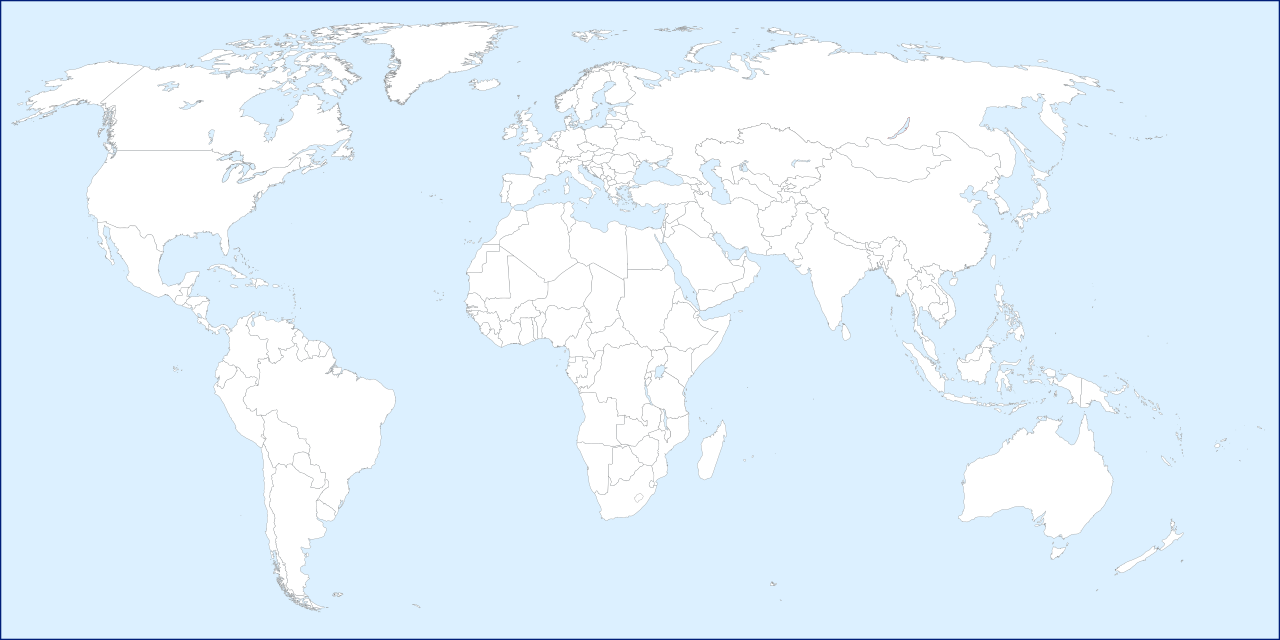
Location in the world

Eswatini

Flag of Eswatini

Africa

World map showing the location of EswatiniEswatini
🇸🇿
Population (2024)
1,242,822
Total area
17,364 km²
Area in square miles
6,704.28 mi²
Coastline
Landlocked · 0 km
Base map adapted from Wikimedia Commons. Population: World Bank (2024); geography: CIA World Factbook.

National digital inclusion context

A portfolio-based view of access, capability, and outcomes.

This profile organizes the initiatives directly connected to Eswatini in the global research inventory. It follows the study's country-profile framework: national context, broadband infrastructure, inclusion practices, education and workforce connections, implementation actors, and intended contribution.

The documented portfolio emphasizes Mobile / Wireless Infrastructure, Public Wi-Fi / Community Network Infrastructure, Backbone / Backhaul / Middle-Mile Infrastructure, 2G/GSM, 4G/LTE. The profile treats infrastructure, affordability, capability, institutions, support, and outcomes as an interconnected system.

Portfolio pattern

What the documented response contains.

Counts reflect source-workbook tags. One initiative may appear in multiple infrastructure or technology categories.

Infrastructure and access

  1. Mobile / Wireless Infrastructure4
  2. Public Wi-Fi / Community Network Infrastructure3
  3. Backbone / Backhaul / Middle-Mile Infrastructure2
  4. Tower / Site Infrastructure2
  5. Community Access / Computing Infrastructure1

Specific technologies

  1. 2G/GSM3
  2. 4G/LTE3
  3. Wi-Fi3
  4. 3G1
  5. Computer / Desktop PC1

Intervention classification

  1. Infrastructure and Specific Technology6
  2. Infrastructure only3
  3. Digital-literacy and reintegration training program1
  4. Neither explicitly identified1

Education and workforce

Connectivity becomes consequential through participation.

2 initiatives explicitly connect to education, K–12, or college/university contexts, and 1 connect to workforce development. Other investments may enable these outcomes indirectly.

Access

Networks, service availability, devices, and connection quality.

Capability

Skills, confidence, accessibility, navigation, and support.

Participation

Education, work, health, government, and civic opportunity.

Sustainability

Governance, operations, maintenance, funding, and learning.

Project and initiative portfolio

11 documented records

Every directly tagged record is shown with details and supporting URLs preserved from the research workbook.

01

Digital-literacy and reintegration training program

Eswatini Women Inmates Basic Computer Skills Programme

Graduation reported May 2026 · Women’s correctional setting in Eswatini
View details
Status / periodGraduation reported May 2026LocationWomen’s correctional setting in EswatiniPopulationWomen inmatesOrganizationsEswatini corrections and training partners

building basic computer skills for a population at risk of digital exclusion

Activities and approach: Basic computer-skills instruction and participant graduation

Computer training
Saturday Observer Eswatini. (2026). Women Inmates Graduate from Basic Computer Skills Programme. https://www.pressreader.com/eswatini/saturday-observer-eswatini-9zb4/20260530/282295326865750Open supporting source ↗
02

Rural mobile broadband

UASF 30 New Rural 3G/4G GSM Sites

Implemented · 30 rural sites, especially Lubombo and Shiselweni
View details
Status / periodImplementedLocation30 rural sites, especially Lubombo and ShiselweniPopulationRural residentsOrganizationsEswatini UASF; licensed operators

Adds new broadband-enabled sites in the least-developed and coverage-gap regions.

Activities and approach: 30 new 3G/4G GSM sites

Mobile / Wireless Infrastructure4G/LTE3G2G/GSM
03

Rural mobile broadband

UASF 50-Site 2G-to-4G Upgrade Project

Implemented · 50 existing GSM sites nationwide
View details
Status / periodImplementedLocation50 existing GSM sites nationwidePopulationRural and underserved residentsOrganizationsEswatini UASF; licensed operators

Upgrades legacy sites to 4G/LTE, expanding high-speed Internet coverage.

Activities and approach: 50 4G/LTE upgrades

Mobile / Wireless InfrastructureTower / Site Infrastructure4G/LTE2G/GSM
04

Backbone resilience

UASF Backbone Redundancy Connectivity Project

Ongoing · National backbone routes
View details
Status / periodOngoingLocationNational backbone routesPopulationCitizens and businessesOrganizationsEswatini UASF; EPTC

Reduces single-point-of-failure risks in upstream connectivity and improves service reliability.

Activities and approach: Redundant backbone routes

Backbone / Backhaul / Middle-Mile Infrastructure
05

Backbone resilience

UASF Backbone Redundancy Project

Ongoing · National backbone routes
View details
Status / periodOngoingLocationNational backbone routesPopulationCitizens and businessesOrganizationsEswatini Universal Access and Service Fund; licensed operators

Reduces single-point-of-failure risks and improves broadband stability.

Activities and approach: Redundant backbone connectivity

Backbone / Backhaul / Middle-Mile Infrastructure
06

Public-sector broadband

UASF eGovernment Connectivity Programme

Ongoing · Government sites
View details
Status / periodOngoingLocationGovernment sitesPopulationCitizens and public agenciesOrganizationsEswatini Universal Access and Service Fund; licensed operators

Connects public services and institutions to reliable broadband.

Activities and approach: Government network connectivity

07

Mobile broadband

UASF Mobile Broadband Programme

Ongoing · Underserved regions
View details
Status / periodOngoingLocationUnderserved regionsPopulationResidents outside adequate commercial coverageOrganizationsEswatini Universal Access and Service Fund; licensed operators

Expands mobile broadband availability through universal-service intervention.

Activities and approach: Mobile broadband

Mobile / Wireless Infrastructure
08

Public Wi-Fi

UASF Public Wi-Fi at 20 Additional Tinkhundla Centres

Implemented 2023 · 20 additional Tinkhundla centres
View details
Status / periodImplemented 2023Location20 additional Tinkhundla centresPopulationResidents using decentralised public servicesOrganizationsEswatini UASF; Ministry of Tinkhundla

Provides subsidized public Internet with daily free data at community service centres.

Activities and approach: Public Wi-Fi; 500MB free daily data

Public Wi-Fi / Community Network InfrastructureWi-Fi
09

Public Internet access

UASF Public Wi-Fi Programme

Ongoing · Public/community locations
View details
Status / periodOngoingLocationPublic/community locationsPopulationResidents lacking household accessOrganizationsEswatini Universal Access and Service Fund; licensed operators

Creates shared public broadband access points.

Activities and approach: Public Wi-Fi

Public Wi-Fi / Community Network InfrastructureWi-Fi
10

Humanitarian digital inclusion

UASF Refugee Community Wi-Fi and Computer Lab Project

Ongoing · Refugee/asylum-seeker community
View details
Status / periodOngoingLocationRefugee/asylum-seeker communityPopulationRefugees and asylum seekersOrganizationsEswatini UASF; partner agencies

Provides subsidized Wi-Fi, devices and digital-literacy facilities to a displaced population.

Activities and approach: Public Wi-Fi; computer lab; digital literacy

Public Wi-Fi / Community Network InfrastructureCommunity Access / Computing InfrastructureWi-FiComputer / Desktop PC
11

Rural mobile broadband

UASF Rural 4G GSM Site Initiative

Ongoing · Rural underserved areas
View details
Status / periodOngoingLocationRural underserved areasPopulationRural communitiesOrganizationsEswatini Universal Access and Service Fund; licensed operators

Adds new 4G-enabled GSM sites to bridge urban-rural coverage gaps.

Activities and approach: 4G base stations

Mobile / Wireless InfrastructureTower / Site Infrastructure4G/LTE2G/GSM

Evidence boundary

Read the portfolio as a starting point, not a final verdict.

Project records document interventions and intended contributions; they do not alone prove nationwide coverage, causal impact, or durable closure.

Profiles will deepen as national statistics, policy documents, evaluations, and implementation evidence are incorporated. Source links allow inspection of underlying evidence.

Evidence and contextProfile Sources

These sources support the country-level demographic, geographic, and connectivity context. Sources tied to individual projects remain with their project records and are not repeated here.

  1. Central Intelligence Agency. (n.d.). Eswatini. The World Factbook. Retrieved September 26, 2026, from https://www.cia.gov/the-world-factbook/countries/eswatini/
  2. International Telecommunication Union. (n.d.). ITU DataHub: Country ICT data. Retrieved September 26, 2026, from https://datahub.itu.int/
  3. World Bank. (n.d.). Individuals using the Internet (% of population): Eswatini. World Development Indicators. Retrieved September 26, 2026, from https://data.worldbank.org/indicator/IT.NET.USER.ZS?locations=SZ
  4. World Bank. (n.d.). Population, total: Eswatini. World Development Indicators. Retrieved September 26, 2026, from https://data.worldbank.org/indicator/SP.POP.TOTL?locations=SZ

Compare another country.

All country profiles →