Infrastructure and access
- Institutional / School Connectivity Infrastructure7
- Backbone / Backhaul / Middle-Mile Infrastructure3
- Fiber / Fixed Broadband Infrastructure3
- Community Connectivity Infrastructure1
- Community Digital Education1
Digital Divide Country Profile · South America
Closing the digital divide, expanding meaningful connectivity, and advancing digital education and workforce participation.
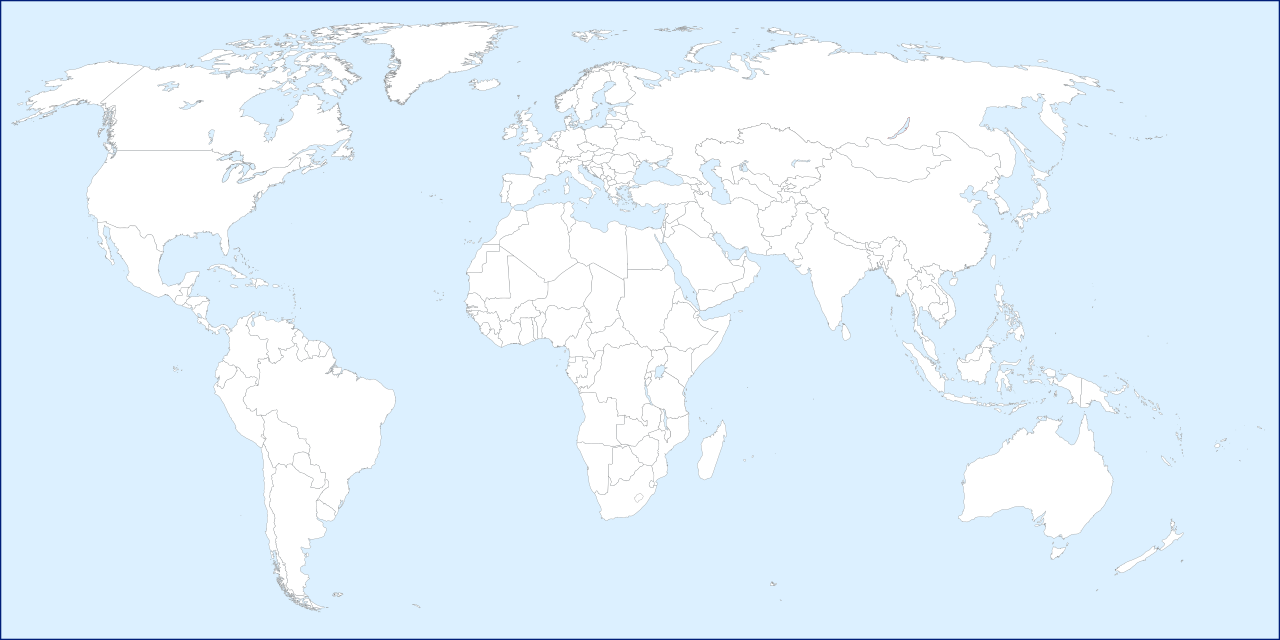
Location in the world

South America
 Brazil
National digital inclusion context
This profile organizes the initiatives directly connected to Brazil in the global research inventory. It follows the study's country-profile framework: national context, broadband infrastructure, inclusion practices, education and workforce connections, implementation actors, and intended contribution.
The documented portfolio emphasizes Institutional / School Connectivity Infrastructure, Backbone / Backhaul / Middle-Mile Infrastructure, Fiber / Fixed Broadband Infrastructure, Wi-Fi, Computer / Desktop PC. The profile treats infrastructure, affordability, capability, institutions, support, and outcomes as an interconnected system.
Portfolio pattern
Counts reflect source-workbook tags. One initiative may appear in multiple infrastructure or technology categories.
Education and workforce
15 initiatives explicitly connect to education, K–12, or college/university contexts, and 0 connect to workforce development. Other investments may enable these outcomes indirectly.
Networks, service availability, devices, and connection quality.
Skills, confidence, accessibility, navigation, and support.
Education, work, health, government, and civic opportunity.
Governance, operations, maintenance, funding, and learning.
Project and initiative portfolio
Every directly tagged record is shown with details and supporting URLs preserved from the research workbook.
National digital-development assessment
Applies the revised ROAMX indicators to identify equity gaps alongside progress in digital public services.
Activities and approach: Assess digital public services, meaningful connectivity, digital literacy, inclusion, rights, and participation using revised indicators
Devices and digital skills
Combines device access, local inclusion points and training.
Activities and approach: 1,511 computers; 136 PIDs; 57 municipalities; 330 trainings
School-connectivity scale-up
Accelerates pedagogical-quality Internet access across public basic-education schools.
Activities and approach: FUST non-reimbursable financing; external/internal networks; managed connectivity
Public-school broadband
Provides full external and internal pedagogical connectivity to underserved schools.
Activities and approach: Transport/access network; Wi-Fi; equipment; 24-month service and maintenance
Public-school broadband
Extends quality broadband and internal Wi-Fi into hard-to-serve northern schools.
Activities and approach: External broadband; internal Wi-Fi/LAN; equipment; managed service
Public-school broadband
Targets school-connectivity gaps in the Northeast with complete managed connectivity.
Activities and approach: Broadband access; Wi-Fi; equipment; monitoring and maintenance
School broadband
Funds high-quality broadband access for public schools, reducing education-related connectivity gaps.
Activities and approach: Broadband access to schools
School Wi-Fi/LAN
Funds internal infrastructure so broadband reaches classrooms and learning spaces rather than stopping at the school demarcation point.
Activities and approach: Internal Wi-Fi/LAN; routers; cabling
Rural/mobile broadband
Supports 4G-or-better mobile access in underserved locations.
Activities and approach: 4G/5G mobile infrastructure
Backbone/middle-mile broadband
Funds high-capacity fiber transport required to connect underserved communities and access networks.
Activities and approach: Fiber-optic middle-mile/backbone
Public/community broadband access
Provides Internet connections to promote digital and social inclusion and e-government access.
Activities and approach: Satellite/terrestrial broadband; public Wi-Fi
AI literacy; digital skills; device access; youth workforce development
Addresses an emerging AI literacy divide by pairing accessible learning with opportunities for device access and practical application.
Activities and approach: Beginner AI learning; practical challenges; hands-on AI tools; localized Portuguese and Spanish content; HP technology opportunities for top performers
Regional fiber backbone
Adds high-capacity neutral transport where terrestrial backhaul is difficult and costly.
Activities and approach: Fiber route; neutral wholesale operation; long-term operations
Regional fiber backbone
Improves resilience, wholesale capacity and public-institution connectivity.
Activities and approach: Optical-fiber backbone; public-institution links; carrier access
Community connectivity and devices
Addresses both device and connectivity barriers in a historically underserved community.
Activities and approach: Eight computers; Wi-Fi Brasil satellite antenna; community access space
Community digital access
Provides free public access to connected computers and digital services.
Activities and approach: Public computers; broadband; assisted community access
Community connectivity; Indigenous and traditional communities; digital inclusion; education; telehealth; digital citizenship; territorial autonomy
Extends meaningful connectivity into remote Amazon territories while coupling network access with local governance, training, essential services and community-led management.
Activities and approach: Connect remote communities; select and train community facilitators; operate local network-management tools and intranet; support education, telehealth and digital public services; strengthen territorial and organizational capacity
Community networks; digital inclusion; women-led connectivity; digital skills; community capacity building
Shifts connectivity from externally delivered access toward community ownership by combining network deployment with women-led skills, governance and locally meaningful technology use.
Activities and approach: Training sessions; knowledge exchanges; in-person workshops; community network governance; deployment and management of mesh-network infrastructure; women-led peer learning
Rural school connectivity
Extends connectivity to schools difficult to reach through commercial fixed networks.
Activities and approach: Broadband installation/service; operator obligations; monitoring
Digital literacy; online safety; community facilitator training; digital citizenship; Indigenous and traditional communities
Addresses the skills and safety dimensions of digital exclusion so newly connected communities can use internet access for education, health, public services, communication and collective goals.
Activities and approach: Facilitator training; digital safety; misinformation awareness; community mediation; access to health and education services; responsible internet use; thematic online classes; support for Digital Empowerment Centers
Evidence boundary
Project records document interventions and intended contributions; they do not alone prove nationwide coverage, causal impact, or durable closure.
Profiles will deepen as national statistics, policy documents, evaluations, and implementation evidence are incorporated. Source links allow inspection of underlying evidence.
These sources support the country-level demographic, geographic, and connectivity context. Sources tied to individual projects remain with their project records and are not repeated here.