Digital Divide Country Profile · Europe

BA

Bosnia and Herzegovina

Closing the digital divide, expanding meaningful connectivity, and advancing digital education and workforce participation.

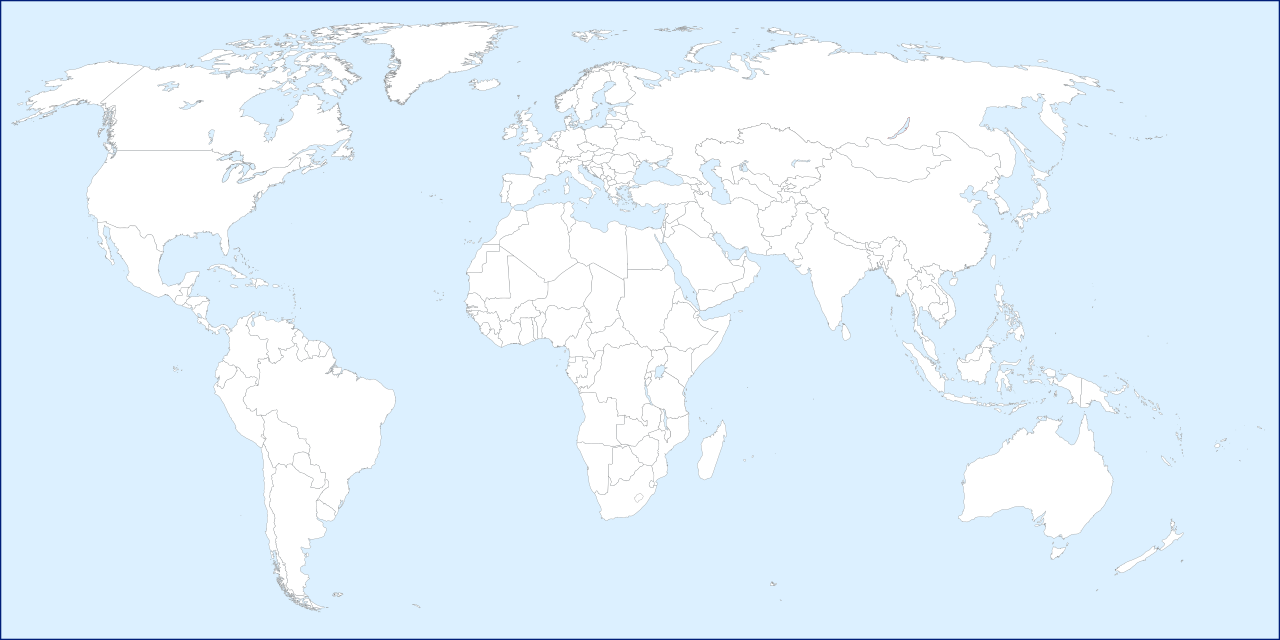
Location in the world

Bosnia and Herzegovina

Flag of Bosnia and Herzegovina

Europe

World map showing the location of Bosnia and HerzegovinaBosnia and Herzegovina
🇧🇦
Population (2024)
3,164,253
Total area
51,197 km²
Area in square miles
19,767.26 mi²
Coastline
20 km
Base map adapted from Wikimedia Commons. Population: World Bank (2024); geography: CIA World Factbook.

National digital inclusion context

A portfolio-based view of access, capability, and outcomes.

This profile organizes the initiatives directly connected to Bosnia and Herzegovina in the global research inventory. It follows the study's country-profile framework: national context, broadband infrastructure, inclusion practices, education and workforce connections, implementation actors, and intended contribution.

The documented portfolio emphasizes Fiber / Fixed Broadband Infrastructure, Infrastructure Planning / Mapping / Funding, Backbone / Backhaul / Middle-Mile Infrastructure, Fiber/Fiber Optic, 5G. The profile treats infrastructure, affordability, capability, institutions, support, and outcomes as an interconnected system.

Portfolio pattern

What the documented response contains.

Counts reflect source-workbook tags. One initiative may appear in multiple infrastructure or technology categories.

Infrastructure and access

  1. Fiber / Fixed Broadband Infrastructure4
  2. Infrastructure Planning / Mapping / Funding4
  3. Backbone / Backhaul / Middle-Mile Infrastructure3
  4. Last-Mile / Access Infrastructure3
  5. Institutional / School Connectivity Infrastructure2

Specific technologies

  1. Fiber/Fiber Optic4
  2. 5G1
  3. GIS / Geospatial Technology1

Intervention classification

  1. Infrastructure and Specific Technology5
  2. Infrastructure only5

Education and workforce

Connectivity becomes consequential through participation.

2 initiatives explicitly connect to education, K–12, or college/university contexts, and 0 connect to workforce development. Other investments may enable these outcomes indirectly.

Access

Networks, service availability, devices, and connection quality.

Capability

Skills, confidence, accessibility, navigation, and support.

Participation

Education, work, health, government, and civic opportunity.

Sustainability

Governance, operations, maintenance, funding, and learning.

Project and initiative portfolio

10 documented records

Every directly tagged record is shown with details and supporting URLs preserved from the research workbook.

01

Regional fiber backbone

Balkans Digital Highway – Energy Grid Fiber Commercialization

Regional initiative / feasibility-to-implementation pathway · Bosnia and Herzegovina transmission-grid fiber routes
View details
Status / periodRegional initiative / feasibility-to-implementation pathwayLocationBosnia and Herzegovina transmission-grid fiber routesPopulationRemote communities and telecom operatorsOrganizationsTransmission-system operator; telecom sector; World Bank

Uses optical ground wire on state-owned energy grids to expand national and regional broadband reach.

Activities and approach: OPGW fiber leasing/open access

Fiber / Fixed Broadband InfrastructureBackbone / Backhaul / Middle-Mile InfrastructureFiber/Fiber Optic
02

Rural broadband backbone

Balkans Digital Highway – Rural/Remote Broadband Reach Component

Regional initiative · Rural and remote regions
View details
Status / periodRegional initiativeLocationRural and remote regionsPopulationCommunities beyond economical commercial fiber routesOrganizationsState-owned energy utilities; telecom operators

Leverages utility fiber to support broadband expansion to remote areas and improve regional interconnection.

Activities and approach: Utility fiber; wholesale/open-access broadband

Fiber / Fixed Broadband InfrastructureBackbone / Backhaul / Middle-Mile InfrastructureLast-Mile / Access InfrastructureFiber/Fiber Optic
03

Broadband coordination capacity

Broadband Competence Office (BCO) Establishment

2025–2027 · State/entity government levels
View details
Status / period2025–2027LocationState/entity government levelsPopulationRural regions, operators and public authoritiesOrganizationsCommunications authorities at state/entity levels

Creates dedicated institutions to coordinate broadband deployment and infrastructure investment.

Activities and approach: BCO staffing; broadband coordination

Last-Mile / Access Infrastructure
04

National fiber backbone

Core Broadband Infrastructure Development

Preparation / expected to 2028+ · Nationwide
View details
Status / periodPreparation / expected to 2028+LocationNationwidePopulationHouseholds, businesses and institutionsOrganizationsMinistry of Communications and Transport; WBIF; EBRD

Develops optical cable and ultrafast broadband infrastructure to reduce national connectivity gaps.

Activities and approach: Optical fiber; ultrafast broadband

Fiber / Fixed Broadband InfrastructureBackbone / Backhaul / Middle-Mile InfrastructureTelecommunications / Broadband InfrastructureFiber/Fiber Optic
05

Broadband investment preparation

Core Broadband Pre-Feasibility Study

2024–2028 / on hold status reported · Nationwide
View details
Status / period2024–2028 / on hold status reportedLocationNationwidePopulationGovernment, operators and underserved communitiesOrganizationsMinistry of Communications and Transport; WBIF; EBRD

Develops investment models and technical options needed to turn broadband strategy into deployable projects.

Activities and approach: Pre-feasibility; investment modelling

Infrastructure Planning / Mapping / Funding
06

National broadband implementation framework

Framework Broadband Strategy and Costed Action Plan

2025–2027 reform agenda · Nationwide
View details
Status / period2025–2027 reform agendaLocationNationwidePopulationCitizens, businesses and public institutionsOrganizationsCouncil of Ministers; communications institutions

Creates the roadmap for universal high-speed Internet access, with explicit rural digital-divide objectives.

Activities and approach: Broadband strategy; funded action plan

Infrastructure Planning / Mapping / Funding
07

School broadband planning

Giga Infrastructure Mapping and Last-Mile School Planning

Ongoing participation · Schools nationwide
View details
Status / periodOngoing participationLocationSchools nationwidePopulationStudents and teachersOrganizationsGovernment participants; ITU/UNICEF

Builds practical capacity for school infrastructure mapping, fiber path analysis and last-mile planning.

Activities and approach: GIS mapping; last-mile design

Fiber / Fixed Broadband InfrastructureLast-Mile / Access InfrastructureInstitutional / School Connectivity InfrastructureInfrastructure Planning / Mapping / Funding
08

School connectivity planning

Giga School Connectivity Governance Capacity Programme

Ongoing participation · Schools nationwide
View details
Status / periodOngoing participationLocationSchools nationwidePopulationStudents and education/telecom plannersOrganizationsGovernment participants; ITU/UNICEF

Builds capacity to govern, plan and finance universal school connectivity.

Activities and approach: School-connectivity governance training

Institutional / School Connectivity InfrastructureInfrastructure Planning / Mapping / Funding
09

5G/mobile broadband

Secure 5G Rollout and Cybersecurity Alignment

2025–2027 · Nationwide
View details
Status / period2025–2027LocationNationwidePopulationMobile users and businessesOrganizationsBosnia and Herzegovina communications authorities

Supports 5G deployment and security compliance to improve future mobile broadband capacity.

Activities and approach: 5G rollout; EU 5G cybersecurity toolbox alignment

Mobile / Wireless Infrastructure5G
10

Broadband financing/model design

Ultrafast Broadband Investment Model Development

Preparation · Nationwide
View details
Status / periodPreparationLocationNationwidePopulationOperators and underserved usersOrganizationsMinistry of Communications and Transport; WBIF

Defines feasible public/private models for ultrafast broadband rollout.

Activities and approach: Investment model; PPP/open-access analysis

Telecommunications / Broadband Infrastructure

Evidence boundary

Read the portfolio as a starting point, not a final verdict.

Project records document interventions and intended contributions; they do not alone prove nationwide coverage, causal impact, or durable closure.

Profiles will deepen as national statistics, policy documents, evaluations, and implementation evidence are incorporated. Source links allow inspection of underlying evidence.

Evidence and contextProfile Sources

These sources support the country-level demographic, geographic, and connectivity context. Sources tied to individual projects remain with their project records and are not repeated here.

  1. Central Intelligence Agency. (n.d.). Bosnia and Herzegovina. The World Factbook. Retrieved September 26, 2026, from https://www.cia.gov/the-world-factbook/countries/bosnia-and-herzegovina/
  2. International Telecommunication Union. (n.d.). ITU DataHub: Country ICT data. Retrieved September 26, 2026, from https://datahub.itu.int/
  3. World Bank. (n.d.). Individuals using the Internet (% of population): Bosnia and Herzegovina. World Development Indicators. Retrieved September 26, 2026, from https://data.worldbank.org/indicator/IT.NET.USER.ZS?locations=BA
  4. World Bank. (n.d.). Population, total: Bosnia and Herzegovina. World Development Indicators. Retrieved September 26, 2026, from https://data.worldbank.org/indicator/SP.POP.TOTL?locations=BA

Compare another country.

All country profiles →